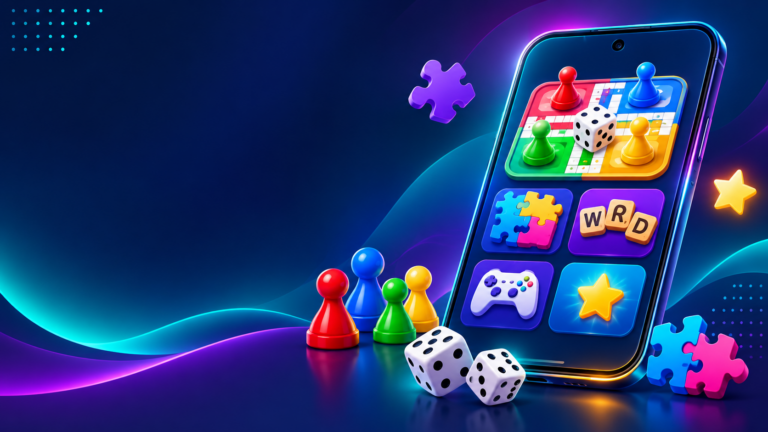
Explore common casual game categories and learn what makes each format different. This page is an educational overview, not a live game lobby or a claim that every title is available through RS9 or any particular app.
Board and turn-based games
Board-style games use turns, movement, matching or simple objectives. Familiar examples include Ludo-style games and Snakes and Ladders. They can help players practise turn-taking, counting and basic planning. Check whether a version is genuinely free to play and whether optional purchases are present.
Dice and number games
Dice games use random number outcomes and may involve scorekeeping, combinations or reaching a target. Read the rules before starting, and remember that random outcomes cannot be reliably predicted.
Puzzles and logic games
Puzzle games can include pattern matching, word challenges, spatial tasks and logic problems. They are often suitable for short sessions and can provide a relaxed way to practise problem-solving.
Arcade and reaction games
Arcade-style games typically use simple controls, short rounds and timing or coordination challenges. Review the app’s age rating, advertising practices and permissions before installing.
What “free to play” should mean
For this website, free-to-play information refers to entertainment that does not require deposits, wagers, paid entry or cash stakes. Some apps may still offer optional purchases, subscriptions or advertising. Read the pricing details carefully and do not make a purchase unless you understand the cost and cancellation terms.
Choose apps carefully
- Use a publisher’s verified website or a trusted app store.
- Check the developer name, age rating and recent reviews.
- Review requested permissions before installation.
- Avoid modified APKs and unknown download links.
- Never share passwords, OTPs or payment credentials.
For practical tips, read our game guides and responsible gaming guide.